


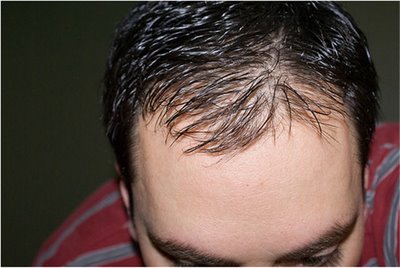
 Hair loss can occur anywhere on the body, and no one is immune. Men, women and children can all experience hair loss. Heredity, medications, medical conditions, cancer treatments or other factors can cause the condition.
Baldness usually refers to excessive scalp hair loss. More often than not, it is a hereditary condition. Pattern baldness is the most common type of hair loss. While women can experience pattern baldness, it is more likely to occur in men.
According to the latest statistics, more than 35 million men experience hair loss. Ninety-five percent of the time, they suffer from male pattern baldness. A receding hairline characterizes this type of hair loss, and the condition becomes more pronounced over time.
Cause of Male Pattern Baldness
Genes and hormonal factors play a key role in the development of male pattern baldness. Hereditary factors cause men to become sensitive to a hormone called dihydrotestosterone or DHT. This hormone is derived from testosterone, the male sex hormone.
When testosterone converts into DHT in the scalp, hair loss occurs. This is due to the miniaturization of hair follicles, which stifles hair growth. The result is the characteristic receding hairline or “widow’s peak.”
Finasteride Benefits for Hair Loss
Finasteride is a synthetic drug that is prescribed for male pattern baldness. Approved by the United States Food and Drug Administration (FDA), it is marketed under several brand and generic names. The drug was originally developed to treat benign prostatic hyperplasia (BPH) and other prostate conditions. Its side effect, hair growth, prompted researchers to study it for hair loss treatment.
Finasteride is a prescription pill that slows hair loss and promotes hair growth. It works by inhibiting 5 alpha-reductase, the enzyme that coverts testosterone into its DHT form. The drug is a highly effective hair loss treatment, but it has potential health risks.
Potential Finasteride Side Effects
The most concerning Finasteride risk is unwanted sexual side effects. Men who take this drug for hair loss may experience impotence or erectile dysfunction (ED), abnormal or premature ejaculation, decreased semen volume, enlarged breasts, testicular pain and diminished sexual desire.
Finasteride users also have a low but increased risk of developing a fast-growing form of prostate cancer. In addition, women of childbearing age are advised against using the drug to treat balding or thinning hair.
Minoxidil, the other FDA-approved hair loss drug, has fewer side effects than finasteride. However, it is not without risks. Unlike finasteride, minoxidil is notable for its ability to grow hair, but it can cause scalp irritations and unwanted hair growth on the face and forehead.
Natural Hair Loss Remedies
Natural hair loss remedies vary in effectiveness based on their ingredients. Men who use these supplements prefer a safer, natural alternative to synthetic medications.
Natural remedies are generally safer than drugs because they do not contain artificial ingredients. However, their effects are similar because the ingredients work in a similar way to the drugs. The most effective natural solutions contain vitamins, minerals and botanicals that inhibit 5 alpha-reductase and block DHT.
Like all supplements, natural hair loss remedies are not regulated by the FDA. However, the highest quality products are compliant with federal government standards. Because they may interact with hair loss drugs and other medications, supplements should only be used with a doctor’s approval.